


India’s GST system has significantly streamlined the way taxes are collected and managed across the country. However, with over 28 states and 8 union territories, understanding the classification of state codes and jurisdictions can still be challenging. As businesses continue to expand and evolve in 2025, staying compliant with GST requires correctly identifying and applying the right state codes and jurisdiction details.
In this guide, we’ll break down these essential aspects of GST state codes and jurisdictions, offering you a clearer understanding to keep your business on track in 2025.
Understanding GST State Code
The GST state code is a unique numeric code assigned to each state and union territory in India. This code forms the first two digits of the Goods and Services Tax Identification Number (GSTIN) and plays a crucial role in GST compliance.
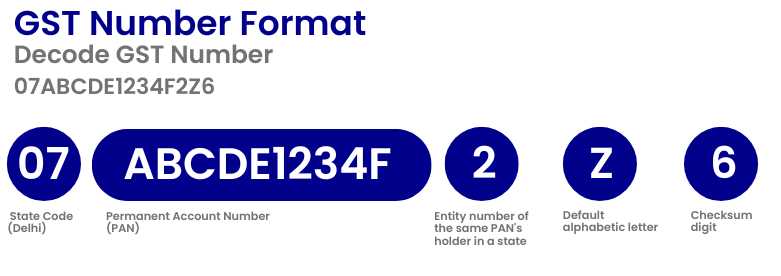
For example, the GST state code for Himachal Pradesh is ’02,’ while Delhi is represented by ’07.’ The state code helps businesses determine applicable tax rates and ensures accurate filing of returns. It is vital for differentiating between states in tax applications such as SGST, CGST, or IGST, making it an essential element in proper invoicing and documentation.
Let’s now take a closer look at the detailed list of GST state codes, which are essential for ensuring accurate tax compliance and smooth business operations across India.
GST State Code List of India
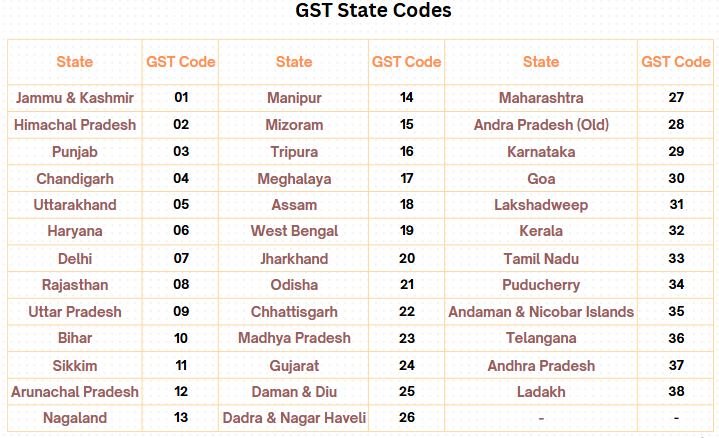
Each state and union territory in India is assigned a specific GST code. This code is essential when filing returns, completing registrations, and invoicing, as it helps identify the correct tax rates applicable based on location. Below is a comprehensive list of GST codes for all states and union territories:
Stay updated with the latest GST state codes and tax rates through Pazy’s automated real-time insights, helping ensure continuous compliance and accuracy for your business.
Now that we’ve explored the GST state codes, let’s understand why these codes are crucial for accurate tax calculation and seamless business compliance.
Significance of GST State Codes
GST state codes are crucial for correctly calculating taxes during invoicing. They ensure the proper application of SGST, CGST, or IGST, depending on whether the transaction is intra-state or inter-state. These codes also help determine the jurisdiction for GST registration, making it easier for businesses to comply with state-specific tax regulations. Using the correct state code reduces the risk of tax errors and helps businesses avoid legal complications.
Additionally, these codes are critical for filing accurate GST returns, including GSTR-1 and GSTR-3B, ensuring proper tax reporting and credit claims. Incorrect or mismatched state codes can lead to discrepancies in tax records, resulting in penalties or delays in processing refunds. By maintaining accuracy in GST state codes, businesses enhance transparency in financial transactions and facilitate smooth tax administration.
If your business operates across multiple states, using a tool like Pazy can simplify the management of GST state codes, ensuring seamless and accurate filing for each jurisdiction. Get started today to streamline your GST compliance.
To fully understand the importance of GST state codes, let’s explore their diverse applications across various business processes and tax-related documentation.
Applications of GST State Codes
GST state codes are widely used in GST-related documents, including registration certificates, invoices, and e-way bills, ensuring accurate classification and compliance. They help businesses determine the correct tax structure, distinguishing between intrastate and interstate transactions for the proper application of SGST, CGST, or IGST. These codes are also crucial for businesses operating across multiple states, as they help manage tax obligations in different jurisdictions, ensuring smooth regulatory compliance.

In addition, GST state codes play an integral role in e-invoicing systems by validating transactions and ensuring seamless integration with tax authorities’ databases. They help businesses generate compliant invoices, reducing errors in tax reporting and input tax credit claims. By using the correct state codes, businesses enhance transparency, streamline financial documentation, and simplify tax audits, ultimately improving overall tax governance.
As we explore the importance of GST state codes, it’s equally important to understand how these codes align with your GST jurisdiction. Let’s take a closer look at GST jurisdiction and its crucial role in ensuring compliant tax operations.
Understanding GST Jurisdiction
GST jurisdiction refers to the geographical area managed by a specific GST office, which is responsible for overseeing compliance and tax collection within that region. Businesses need to understand their jurisdiction to ensure they are dealing with the correct tax authorities and following the right procedures, thereby avoiding penalties.

GST jurisdiction is classified into two main categories. The first is Central Jurisdiction, which applies to businesses engaged in interstate transactions or those involved with the central government. The second is State Jurisdiction, which applies to businesses operating within a specific state and dealing with its tax system. Properly identifying your GST jurisdiction helps in ensuring compliance with the applicable tax rules and regulations.
How to Find Your GST Jurisdiction?
To find your GST jurisdiction, you can refer to several reliable resources. Below are a few options to help you identify your correct GST jurisdiction:
- GST Registration Certificate: Your GST registration certificate will contain all the jurisdictional details, such as the GST office that is assigned to your business.
- CBIC Portal: The CBIC Portal offers a ‘Know Your Jurisdiction’ feature, which provides detailed jurisdiction information based on your GSTIN.
- State-Specific Websites: For more precise and localized jurisdiction details, visit the official state-specific GST website. Many states provide their own tools and resources for taxpayers to verify their jurisdiction.
How to Correct Incorrect GST Jurisdiction Details?
If you find that your jurisdiction details are incorrect, you can rectify them by following the process outlined in form REG-06. By contacting the designated GST officers through official portals, businesses can ensure that their jurisdiction details are accurate, preventing future issues.
With a clear understanding of GST jurisdiction and the importance of compliance, let’s explore how businesses can adopt innovative solutions like Pazy to ensure smooth and accurate tax management across states.
Pazy’s Solutions for State Code and Jurisdiction Compliance

Pazy is an all-in-one automation platform designed to simplify business operations. Its compliance monitoring, real-time reports, and insights efficiently manage GST state codes and jurisdictions. By automating updates and ensuring accurate tax calculations, Pazy helps businesses easily manage intricate tax regulations and maintain compliance across multiple states.
- Automated GST Reconciliation
Pazy’s solution automates the reconciliation of GST records, ensuring seamless matching of input and output taxes. This automation eliminates manual errors, streamlining the entire reconciliation process and maintaining accuracy in your tax filings.
- Real-Time Error Alerts
With Pazy, you receive real-time error alerts, enabling immediate corrections before submission. This proactive approach prevents costly mistakes and ensures smooth tax filing.
- Compliance Monitoring
Pazy’s compliance monitoring tools track GST regulations and state-specific requirements, ensuring your business remains up-to-date with changing laws. By continuously reviewing your tax filings, Pazy helps prevent compliance issues before they arise.Pazy simplifies the allocation of state codes and GST jurisdiction in filings for SMBs, improving compliance and cash flow. By integrating with accounting tools, it streamlines processes for finance teams and enhances audit readiness. Industry-specific businesses and startups also benefit from efficient ITC management, ensuring compliance and supporting growth.
Conclusion
Understanding and applying GST state codes and jurisdiction details is crucial for smooth business operations and avoiding penalties. Correctly using state codes ensures proper tax calculation, timely returns, and regulatory compliance, while understanding jurisdiction helps businesses engage with the right tax authorities.
Pazy offers powerful tools to streamline GST compliance management that automate these processes, keeping your business aligned with updated regulations and jurisdictional accuracy. With Pazy’s reliable solutions, businesses can focus on growth rather than compliance challenges.
If you’re seeking an effective way to manage multi-state GST compliance, Pazy provides tools that help streamline the handling of GST state codes, ensuring smooth operations across various locations. Schedule a Free Demo today!
FAQs
1. Can my business fall under multiple GST jurisdictions?
Yes, if your business operates in multiple states or union territories, it may fall under different GST jurisdictions for each location.
2. How can I update my GST state code if I move to a different state?
To update your GST state code due to relocation, you must submit an amendment request through the GST portal or submit Form REG-14.
3. Is the GST jurisdiction the same as the tax office location?
The GST jurisdiction is determined by the location of your business and its corresponding tax authority, which may not always be the same as the physical location of your office.
4. What happens if I select the wrong GST state code during registration?
Selecting an incorrect GST state code can lead to errors in tax filings and potential penalties. It should be corrected immediately by contacting the relevant tax authorities.
5. Are there specific GST jurisdiction offices for exempt businesses?
Exempt businesses are still required to register and report to the respective GST jurisdiction office. The exemption applies only to tax collection and payment, not jurisdictional authority.
6. Is GST jurisdiction applicable to all types of businesses?
Yes, GST jurisdiction applies to all businesses registered under GST, including individuals, companies, and partnerships.
7. What is the role of the GST state code in inter-state transactions?
The GST state code helps identify the state where the supply originates, which is crucial for determining whether the transaction is inter-state or intra-state.
8. Can GST jurisdiction affect my GST refund?
Yes, the jurisdiction office plays a role in processing GST refunds, and any discrepancies in jurisdiction details may delay or affect the refund process.
9. What is the deadline to correct incorrect GST jurisdiction details?
You should correct incorrect GST jurisdiction details as soon as possible to avoid compliance issues, with the process generally taking up to 15 days after submission.
10. How does GST jurisdiction differ for online businesses?
For online businesses, the jurisdiction is determined by the location of the business’s primary place of operation or registered office, regardless of where customers are located.